Amazon Leo Vulcan launch failure: 40 satellites lost, what happened and what's next
ULA's Vulcan failed 10 minutes into flight on 15 Nov 2026, losing 40 Amazon Leo satellites. Timeline, statements, satellites in orbit and the next launch.
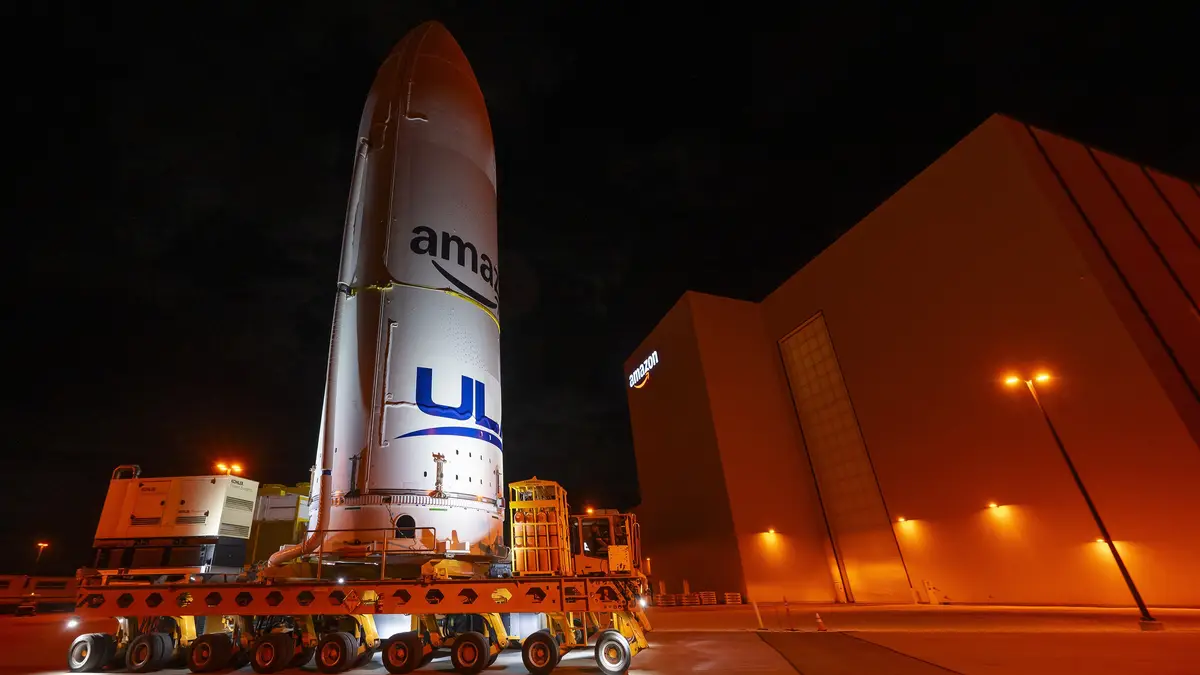
ULA's Vulcan rocket failed about 10 minutes into its flight on Sunday, 15 November 2026, and all 40 Amazon Leo satellites on board were lost. It was Amazon's first Leo mission on Vulcan (called LV-01) and United Launch Alliance's first outright mission failure since the company was formed in 2006. Nobody was hurt, the cause is still under investigation, and Amazon's next launch, 36 satellites on an Ariane 6 from French Guiana, is still listed for no earlier than 23 November.
Below: what happened minute by minute, what ULA and Amazon have said, how many Leo satellites are actually up, and what the loss means for Amazon's plan to start its Starlink rival.
What happened to the Amazon Leo Vulcan launch?
Vulcan lifted off from Space Launch Complex-41 at Cape Canaveral Space Force Station at 12:40 p.m. EST (17:40 UTC) after two scrubbed attempts (a ground nitrogen plant problem on Friday and a network issue between the rocket and ground systems on Saturday). Here's the flight as reported by Amazon, ULA and the specialist press:
| Time after liftoff | What happened | Source |
|---|---|---|
| ~1 min 35–40 s | Six Northrop Grumman GEM 63XL solid boosters burned out and separated | Spaceflight Now, Via Satellite |
| ~5 min | First stage (BE-4 engines) shut down; Centaur V upper stage ignited; payload fairing jettisoned | Via Satellite |
| ~9.5 min | Last telemetry shown on the webcast; mission appeared on track | Via Satellite |
| ~10 min | ULA: the vehicle "suffered an anomaly 10 minutes into the flight and failed to deliver the Amazon mission to orbit" | ULA statement via Reuters and Via Satellite |
| ~17 min (planned) | Centaur's first engine cutoff, never confirmed | Via Satellite |
Two details from Spaceflight Now's William Harwood are worth noting: the first stage appeared to burn longer than the pre-launch timeline and separated later than expected, and the telemetry animation showed the Centaur making unusual orientation adjustments early in its burn. That points towards the upper stage, but ULA has not named a cause, and neither has Amazon. Treat anything more specific you see on social media as speculation for now.
Northrop Grumman said its preliminary data shows the GEM 63XL boosters "performed as expected", which matters because booster nozzle problems were the reason Vulcan had been grounded for about nine months before this flight, according to Via Satellite.
What did ULA and Amazon say?
ULA said: "ULA exists to provide assured access to space for our nation and for the customers who depend on us. Today, we did not meet that standard." It added that it would "work closely with our customer and other appropriate organizations to find the cause, determine the appropriate corrective action, and return to flight as quickly as possible", and that "since the anomaly just occurred, we don't have any specific data yet" (quoted by Via Satellite and Reuters).
Amazon said: "There is risk with any launch, and that's especially true for inaugural missions like LV-01. ULA has been a trusted partner for Amazon, and we believe they'll learn from this mission and deliver on their long-term plans for Vulcan." Amazon has added an editor's note to its official mission tracker saying the payload was lost.
Reuters, citing a person familiar with the matter, reported that Blue Origin, which builds Vulcan's BE-4 first-stage engines, is working with ULA on the investigation, and that it was unclear whether the BE-4 engines played any role.
How many Amazon Leo satellites are in orbit now?
Amazon's own mission list gives the clearest count. Before LV-01, Amazon had flown 14 successful missions:
| Rocket | Missions flown | Satellites launched |
|---|---|---|
| ULA Atlas V | 8 (KA-01 to KA-03, LA-04 to LA-08) | 224 |
| SpaceX Falcon 9 | 3 (KF-01 to KF-03) | 72 |
| Arianespace Ariane 64 | 3 (LE-01 to LE-03) | 100 |
| Total launched successfully | 14 | ~396 |
| ULA Vulcan (LV-01, 15 Nov 2026) | 1 | 40 lost |
Totals are our sum of the per-mission counts on Amazon's tracker. Amazon itself says "nearly 400 satellites to date across 14 missions"; Reuters reported 398. Launched is not the same as operational: satellites are raised from about 465 km to 630 km and commissioned before they serve customers.
So the loss is roughly a tenth of everything Amazon has launched so far, in a single afternoon. For context, the full first-generation constellation is about 3,232 satellites, per the FCC figures reported by Via Satellite.
When is the next Amazon Leo launch?
Next up is LE-04 ("Leo Europe 4"), Amazon's 16th mission:
- Rocket: Arianespace Ariane 64
- Date: no earlier than Monday, 23 November 2026; Amazon says the exact window will be shared closer to launch
- Site: Guiana Space Centre, Kourou, French Guiana
- Payload: 36 Amazon Leo satellites (deploying at about 465 km)
- Milestone: it would bring Arianespace's Leo total to 136 satellites
Ariane 6 uses an entirely different rocket and upper stage from Vulcan, so the Vulcan investigation should not directly hold up LE-04. Amazon published photos of the LE-04 satellites arriving in French Guiana for processing. Keep an eye on Amazon's mission page and Arianespace's channels for the final launch time; we'll update this article when it's set.
Why does losing Vulcan hurt Amazon Leo so much?
Because Vulcan was supposed to be Amazon's workhorse. Spaceflight Now reports Amazon bought 38 Vulcan launches, alongside 24 New Glenn, 24 Ariane 6 and 13 Falcon 9 flights. Amazon Leo launch systems director Melissa Wuerl told Via Satellite before the flight: "We're launching close to 1,500 satellites on Vulcan, which is nearly half of our constellation", and called it a vehicle "meant to fly at a very high cadence."
| Launch provider | Status after 15 November (as reported) |
|---|---|
| ULA Vulcan (38 launches bought) | Grounded pending investigation; Reuters expects it to be out for months |
| ULA Atlas V | 8 Leo missions flown |
| Blue Origin New Glenn (24) | Still returning to flight after a May 2026 on-pad explosion, per Spaceflight Now |
| Arianespace Ariane 6 (24) | Next Leo launch NET 23 November |
| SpaceX Falcon 9 (13) | 3 Leo missions flown |
The timing is awkward. Amazon missed the original FCC requirement to have half its constellation up by 30 July 2026, and in June the FCC waived that milestone rather than enforcing it. The waiver came with conditions: per Via Satellite, first-generation satellites launched after 30 July lose their spectrum priority until 30 March 2028 (or until half the constellation is up), and Amazon still forfeits its surety bond. The final deadline to deploy the full constellation, 30 July 2029, did not change. Every month a 40-satellite rocket sits on the ground makes that date harder.
Will Amazon Leo service still launch in 2026?
Amazon hasn't changed its public plan. Its mission page still says Leo is "preparing to roll out service to customers worldwide". Reuters noted Amazon had "hoped to begin initial internet service this year" and that launch delays across providers have slowed deployment.
What we can say with confidence: the satellites already up are not affected by Sunday's failure, early enterprise and government partners (such as those announced in Uzbekistan and South Africa) depend on coverage density, and losing 40 satellites delays that density. Whether it moves Amazon's 2026 start date is something only Amazon can answer, and it hasn't. Our Amazon Leo price, speeds and launch date guide has what's known about plans and terminals.
Editor's take
This is a serious setback, not a fatal one. The bigger problem than the 40 satellites is the rocket: Amazon built its launch plan around Vulcan carrying roughly half the constellation, and Vulcan has now spent most of 2026 grounded. Ariane 6 and Falcon 9 can keep Leo moving, but they can't replace 38 Vulcan flights on their own, especially with New Glenn also still recovering. The number to watch over the next few weeks isn't Amazon's satellite count; it's how quickly ULA names a root cause. A clear, fixable answer by early 2027 keeps the 2029 deadline realistic. A long, murky investigation does not.
What are people saying?
We couldn't access Reddit threads directly for this story, so here are the reactions on the record:
- NASA Administrator Jared Isaacman posted on X, as quoted by Spaceflight Now: "Appreciate you quickly keeping the public and your partners informed" and "Artemis, Moon Base, and the nation need ULA. We are in your corner and here to help."
- Northrop Grumman, which supplies the boosters, said "the preliminary data shows the GEM 63XL boosters performed as expected" (Via Satellite).
The questions readers are searching for most: Was anyone hurt? (It was an uncrewed launch, and no injuries have been reported.) Did the satellites fall back to Earth? (Neither Amazon nor ULA has said where the upper stage and payload ended up.) And does this delay Amazon Leo service? (See above; Amazon hasn't said.)
Amazon Leo Vulcan launch failure FAQ
What happened to the Amazon Leo launch today?
On 15 November 2026, ULA's Vulcan rocket carrying 40 Amazon Leo satellites suffered an anomaly about 10 minutes after liftoff and failed to reach orbit. All 40 satellites were lost.
How many satellites did Amazon lose in the Vulcan failure?
40, the largest batch Amazon had put on one rocket.
What caused the Vulcan launch failure?
Not known yet. ULA says it is investigating with Amazon and others. Reporting points to a problem during the Centaur upper stage's burn, but ULA has not confirmed a cause.
Was the Vulcan failure caused by the solid rocket boosters again?
Northrop Grumman says preliminary data shows the boosters performed as expected and separated normally. The anomaly came after booster separation.
When is the next Amazon Leo launch?
LE-04 on an Ariane 6 from Kourou, French Guiana, no earlier than 23 November 2026, carrying 36 satellites.
How many Amazon Leo satellites are in orbit?
Amazon says nearly 400 have been launched across 14 successful missions (our count from Amazon's list: about 396). Not all of them are necessarily at their final altitude or in service yet.
Is Amazon Leo service delayed?
Amazon hasn't announced a change. Its mission page still says it is preparing to roll out service to customers worldwide; Reuters notes Amazon had hoped to start initial service in 2026.
Was anyone injured in the Vulcan launch failure?
The flight was uncrewed, and none of the official statements or reports we reviewed mention injuries. The failure happened about 10 minutes into flight, long after the rocket had left the launch area.
Also on 9to5Amazon today: Kindle Unlimited is now Kindle+: price, audiobooks and whether it's worth it. For the pre-launch details of this mission, see our Vulcan LV-01 launch guide, and for the basics, Amazon Leo (Project Kuiper) explained.
Sources
- Amazon: Amazon Leo mission updates (mission list, LV-01 editor's note, LE-04 details)
- Amazon: Amazon Leo to launch 40 satellites on its first Vulcan mission
- Via Satellite: ULA Vulcan Rocket Suffers Anomaly During First Amazon Leo Launch (15 Nov 2026)
- Spaceflight Now: ULA suffers first outright failure with loss of Vulcan rocket carrying 40 Amazon Leo satellites (15 Nov 2026)
- Reuters via Yahoo Finance: Rocket from Boeing-Lockheed firm fails mid-flight, destroys payload of Amazon satellites (15 Nov 2026)
- Via Satellite: FCC Gives Amazon Leo 50% Deployment Waiver, With Conditions on Spectrum Priority (5 Jun 2026)
Featured image: an Amazon payload fairing with United Launch Alliance branding outside Amazon's facility in Florida, published by Amazon ahead of the LV-01 mission. Photo: Amazon. Source