AWS Graviton5 R9g for RDS and Aurora: price vs R8g, regions, engine versions
db.r9g is GA on Aurora and RDS: up to 30% faster (AWS claim) for ~0.5% more than R8g. Price table, regions, supported engine versions and how to switch.
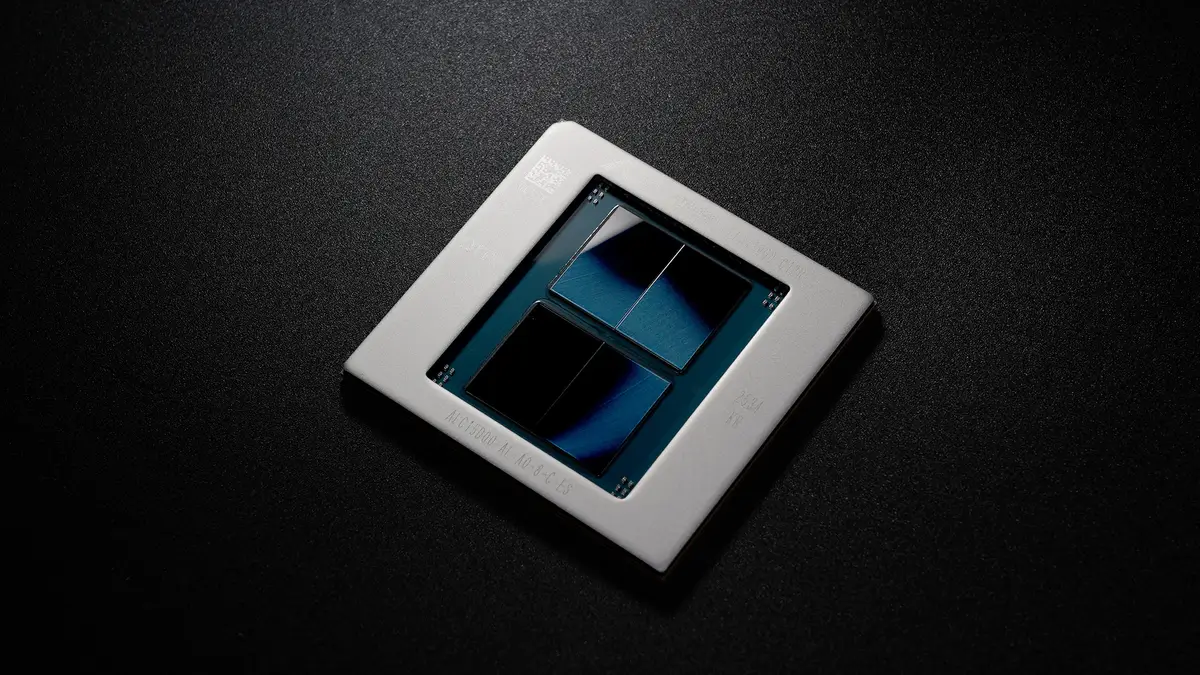
Short answer: Since 12 November 2026, you can run Amazon Aurora (PostgreSQL and MySQL compatible) and Amazon RDS for PostgreSQL, MySQL and MariaDB on db.r9g, the memory-optimised database instances built on AWS's Graviton5 chip. AWS claims up to 30% better performance and up to 22% better price-performance than Graviton4 instances of the same size on Aurora. The on-demand price is only about 0.5% higher than db.r8g, based on AWS's own price list. There are two catches. R9g is only in four regions (N. Virginia, Ohio, Oregon and Frankfurt), and it needs recent engine versions. RDS for MySQL 8.0, for example, can't use it.
Below we cover what db.r9g is, how much it costs per size, which engine versions qualify, how to switch, and when it's worth moving off R8g.
If you're new to Graviton5 itself, start with our explainer: AWS Graviton5 is generally available: specs, instances and price vs Intel.
What are Graviton5 R9g database instances?
"R" instances are AWS's memory-optimised family. They have 8 GiB of RAM per vCPU, which suits databases that need a big buffer pool or cache. The "9" means the ninth generation, and the "g" means a Graviton (Arm) processor. Graviton5 is the fifth generation of Amazon's own server CPU.
On the database side, AWS's What's New post from 12 November 2026 gives these figures:
| Spec (AWS figures) | db.r9g |
|---|---|
| Processor | AWS Graviton5 |
| Sizes | 9, from large to 48xlarge |
| Max vCPUs | 192 |
| Memory-to-vCPU ratio | 8:1 (up to 1,536 GiB on 48xlarge) |
| Network bandwidth | Up to 100 Gbps |
| EBS bandwidth | Up to 72 Gbps |
| Engines | Aurora PostgreSQL, Aurora MySQL, RDS for PostgreSQL, RDS for MySQL, RDS for MariaDB |
| Regions at launch | US East (N. Virginia), US East (Ohio), US West (Oregon), Europe (Frankfurt) |
There's no Oracle, SQL Server or Db2 support. AWS's instance class support table marks those three engines as "No" for every db.r9g size.
How is this different from EC2 R9g?
The EC2 versions, R9g and R9gd, went generally available on 31 August 2026, in the same four regions. The EC2 R9g page lists 11 sizes, from r9g.medium up to r9g.metal-48xl. The database version has nine (large to 48xlarge); there's no medium or bare-metal size on RDS.
Correction note: our October Graviton5 explainer said we hadn't seen R9g announced. That was wrong for EC2, which launched R9g in August. We've added a correction there.
How much does db.r9g cost?
These are on-demand, Single-AZ, per-hour prices in US East (N. Virginia), taken from the AWS public price list file for Amazon RDS (last modified 13 November 2026). "Per month" is our estimate at 730 hours. Storage, I/O, backups and data transfer are billed separately.
| Size | vCPU / RAM | RDS PostgreSQL r9g | RDS PostgreSQL r8g | Aurora (Standard) r9g | Est. per month, RDS PG r9g |
|---|---|---|---|---|---|
| large | 2 / 16 GiB | $0.2402 | $0.2390 | $0.2774 | ~$175 |
| xlarge | 4 / 32 GiB | $0.4804 | $0.4780 | $0.5548 | ~$351 |
| 2xlarge | 8 / 64 GiB | $0.9608 | $0.9560 | $1.1096 | ~$701 |
| 4xlarge | 16 / 128 GiB | $1.9216 | $1.9120 | $2.2192 | ~$1,403 |
| 8xlarge | 32 / 256 GiB | $3.8432 | $3.8240 | $4.4384 | ~$2,806 |
| 12xlarge | 48 / 384 GiB | $5.7648 | $5.7360 | $6.6576 | ~$4,208 |
| 16xlarge | 64 / 512 GiB | $7.6864 | $7.6480 | $8.8768 | ~$5,611 |
| 24xlarge | 96 / 768 GiB | $11.5296 | $11.4720 | $13.3152 | ~$8,417 |
| 48xlarge | 192 / 1,536 GiB | $23.0592 | $22.9440 | $26.6304 | ~$16,833 |
A few things stand out:
- R9g costs about 0.5% more than R8g on RDS PostgreSQL, Aurora Standard and Aurora I/O-Optimized. On a db.r9g.large, that's roughly 88 cents a month.
- RDS for MySQL and MariaDB have the same r9g prices as RDS PostgreSQL in that price file ($0.2402/hr for large).
- Multi-AZ doubles the price. A Multi-AZ db.r9g.large on RDS PostgreSQL is $0.4804/hr.
- Aurora I/O-Optimized costs more per hour ($0.3608/hr for large), but you don't pay per-I/O charges.
Reserved instances: the price list file we checked had no Reserved Instance terms for db.r9g yet, while db.r8g had them. If you're used to buying RDS RIs, check the RDS console before you commit to a migration. On-demand is the only option we could confirm.
Why the database premium is smaller than EC2's
On EC2, Classmethod's DevelopersIO blog found that R9g on-demand prices were "a uniform +9.0% higher than R8g across all 11 sizes" (Classmethod, 2 September 2026). On RDS and Aurora, the gap in AWS's own price file is about 0.5%. So if you've been putting off Graviton5 because of the EC2 price rise, the database version is a different calculation.
Which engine versions support db.r9g?
This is where most migrations will get stuck. From the AWS documentation tables (checked 15 November 2026):
| Engine | Minimum versions for db.r9g |
|---|---|
| RDS for PostgreSQL | 14.18+, 15.13+, 16.9+, 17.5+, 18.1+ |
| RDS for MySQL | 8.4.5+ only (no 8.0) |
| RDS for MariaDB | 10.5.28+, 10.6.22+, 10.11.13+, 11.4.7+, 11.8.3+, 12.3.2+ |
| Aurora PostgreSQL | Specific minors in 14, 15, 16, 17 and 18, from 14.17, 15.10, 16.8, 17.4 and 18.3 (not every minor in between) |
| Aurora MySQL | Specific 3.08–3.14 releases, plus 8.4.7, 8.4.8 and 8.4.10 |
Two notes:
- Aurora lists specific versions, not "and higher". For example, Aurora PostgreSQL 14.21 isn't in the list, while 14.20 and 14.22 are. Check your exact minor version against the Aurora table.
- RDS for MySQL 8.0 isn't supported. If you're still on 8.0, you'll need to upgrade to 8.4 first, which is a major-version upgrade and needs its own testing.
How do I switch an RDS or Aurora database to R9g?
Changing the instance class is a standard modification. You don't need to dump and restore. Here's a safe order:
- Check your region. It must be us-east-1, us-east-2, us-west-2 or eu-central-1.
- Check your engine version against the table above. Upgrade the minor or major version first if you need to.
- Test on a copy. Restore a snapshot or create an Aurora clone, change it to R9g, and run your real workload against it.
- For Aurora, add an R9g reader to the cluster, let it warm up, then fail over to it. That keeps downtime to a failover.
- For RDS (Single-AZ or Multi-AZ), expect a brief interruption while the instance class changes; plan it like any other instance resize.
- Apply in a maintenance window, or right away if you accept the restart.
With the AWS CLI, the class change on RDS looks like this:
aws rds modify-db-instance \
  --db-instance-identifier my-database \
  --db-instance-class db.r9g.xlarge \
  --apply-immediately
Leave out --apply-immediately to wait for the next maintenance window.
Graviton is Arm, but on RDS and Aurora that doesn't matter: AWS runs the database engine for you, and your application connects over the network as before. If you've already moved from x86 (db.r6i, db.r7i) to Graviton (db.r7g, db.r8g), this is just another class change.
Is db.r9g worth it over db.r8g?
It depends on what's limiting your database.
| Your situation | Our suggestion |
|---|---|
| CPU-bound on r8g, in a supported region and version | Test R9g now. Up to 30% more performance (AWS claim) for about 0.5% more is a good trade if it holds for your workload. |
| Memory-bound (buffer pool too small) | R9g has the same RAM per size as R8g. Going up a size helps; switching generation alone may not. |
| You rely on Reserved Instances | Wait until RI pricing for db.r9g shows up for your engine and region. |
| RDS for MySQL 8.0 | Plan the 8.4 upgrade first; R9g isn't an option yet. |
| Outside the four launch regions | Not available. Graviton5 expanded to more regions later for M9g, so watch AWS What's New. |
| Oracle, SQL Server or Db2 | Not supported on R9g. |
Editor's take: This is one of the easier upgrade calls AWS has given database teams in a while. On EC2, Graviton5 comes with a 9% price increase. On RDS and Aurora, the increase is a rounding error. If your engine version qualifies and you run in one of the four regions, test a reader or a snapshot copy this month. The "up to 30%" is AWS's best-case figure, though, and it explicitly varies by engine, version and workload. Measure your p95 query latency and CPU before and after, and don't assume you can drop a size until your own numbers say so.
What are people saying?
We couldn't find Reddit or forum threads about db.r9g yet; the RDS launch is only a few days old. The closest community data point is the Classmethod engineer who launched EC2 R9g on day one. They reported Graviton5 running at 3,300 MHz versus 2,800 MHz on R8g and 48 MiB of L3 cache versus 36 MiB, as seen from inside the instance (Classmethod DevelopersIO).
The questions database teams are asking:
- Will RDS Reserved Instances for db.r9g be priced like r8g?
- When will R9g reach Ireland, Tokyo, Singapore and Sydney?
- Will RDS for MySQL 8.0 ever get R9g, or is 8.4 required for good?
- Does the 30% figure hold for write-heavy OLTP, or mainly for read-heavy work?
We'll update this article as AWS answers them. re:Invent 2026 is weeks away; see our re:Invent 2026 guide.
FAQ
What is db.r9g in AWS RDS?
db.r9g is a memory-optimised database instance class for Amazon RDS and Aurora, powered by AWS Graviton5. It has 8 GiB of RAM per vCPU and comes in nine sizes, from db.r9g.large (2 vCPU, 16 GiB) to db.r9g.48xlarge (192 vCPU, 1,536 GiB).
When did R9g become available for Aurora and RDS?
AWS announced general availability on 12 November 2026. EC2 R9g and R9gd instances launched earlier, on 31 August 2026.
How much does db.r9g.large cost?
In US East (N. Virginia), on-demand Single-AZ, db.r9g.large costs $0.2402 per hour on RDS for PostgreSQL, MySQL or MariaDB. It costs $0.2774 per hour on Aurora Standard and $0.3608 per hour on Aurora I/O-Optimized. That's about $175 a month on RDS PostgreSQL, by our estimate.
Is R9g faster than R8g?
AWS claims up to 30% better performance and up to 22% better price-performance than Graviton4 instances of the same size on Aurora, depending on engine, version and workload. These are AWS figures; we haven't seen independent database benchmarks yet.
Which regions support Aurora R9g?
At launch: US East (N. Virginia), US East (Ohio), US West (Oregon) and Europe (Frankfurt).
Does RDS for MySQL 8.0 support db.r9g?
No. AWS's support table lists only MySQL 8.4.5 and higher for db.r9g on RDS for MySQL.
Can I use R9g with RDS for Oracle or SQL Server?
No. AWS's documentation marks Oracle, SQL Server and Db2 as unsupported on every db.r9g size.
Are there Reserved Instances for db.r9g?
The AWS RDS price list file we checked (13 November 2026) didn't include Reserved Instance terms for db.r9g in US East (N. Virginia). Check the RDS Reserved Instances page in your console for current availability.
Also worth reading: how RDS per-snapshot billing works, and today's other story, the Amazon Housing Fund explained.
Sources
- AWS What's New, "Amazon Aurora and RDS now support Graviton5-based R9g database instances" (12 Nov 2026): https://aws.amazon.com/about-aws/whats-new/2026/11/amazon-aurora-rds-postgresql-mysql-mariadb-r9g-instances/
- AWS What's New, "Amazon EC2 R9g and R9gd memory optimized instances are now available" (31 Aug 2026): https://aws.amazon.com/about-aws/whats-new/2026/08/amazon-ec2-r9g-and-r9gd-memory-optimized-instances-are-now-available/
- Amazon EC2 R9g instances page: https://aws.amazon.com/ec2/instance-types/r9g/
- AWS docs, supported DB engines for RDS instance classes: https://docs.aws.amazon.com/AmazonRDS/latest/UserGuide/Concepts.DBInstanceClass.Support.html
- AWS docs, supported DB engines for Aurora instance classes: https://docs.aws.amazon.com/AmazonRDS/latest/AuroraUserGuide/Concepts.DBInstanceClass.SupportAurora.html
- AWS Price List file for Amazon RDS, US East (N. Virginia): https://pricing.us-east-1.amazonaws.com/offers/v1.0/aws/AmazonRDS/current/us-east-1/index.json
- About Amazon, Graviton5 announcement: https://www.aboutamazon.com/news/aws/aws-graviton-5-cpu-amazon-ec2
- Classmethod DevelopersIO, "EC2 R9g instances (Graviton5) became GA": https://dev.classmethod.jp/en/articles/ec2-r9g-graviton5-instance-launch/
This article was written using official AWS documentation and pricing data; we have not run db.r9g instances ourselves.
Featured image: AWS Graviton5 chip, official Amazon press image. Source