Amazon Leo (Project Kuiper) Explained: Satellite Internet, Launch Status and Availability
The short answer
Project Kuiper is Amazon's low-Earth-orbit satellite broadband network, renamed Amazon Leo in November 2025. Amazon is licensed by the US FCC for 3,236 satellites and had launched roughly 400 production satellites by mid-2026, with an enterprise preview under way and a wider rollout planned as coverage grows. In India, Amazon has applied for the licences it needs but, as of October 2026, we found no public record that the GMPCS licence or IN-SPACe authorisation has been granted.
What is Project Kuiper (Amazon Leo)?
Amazon Leo is a constellation of satellites in low Earth orbit (LEO), a few hundred kilometres up, designed to deliver fast, low-latency internet to homes, businesses, governments and mobile users, especially where fibre and mobile networks don't reach. It competes most directly with SpaceX's Starlink and Eutelsat OneWeb.
The system has three main parts:
| Part | What it does |
|---|---|
| Satellites | Relay data between users and the ground network; linked to each other with optical (laser) links |
| Customer terminals | Flat antennas at the user's site that talk to satellites overhead |
| Ground gateways and AWS | Connect the satellite network to the internet and to Amazon Web Services |
Because the satellites are close to Earth, latency is far lower than with traditional geostationary satellite internet, which sits about 36,000 km up.
Why did Amazon rename Kuiper to Amazon Leo?
Amazon renamed Project Kuiper to Amazon Leo in November 2025, at the same time as it opened a public waitlist and announced an enterprise preview. "Kuiper" had been the internal project codename since 2019; "Leo" refers to low Earth orbit. The first 153 production satellites launched under the Kuiper name.
How many Amazon Leo satellites are in orbit? (launch status)
| Milestone | Date | Detail |
|---|---|---|
| FCC authorisation | July 2020 | 3,236 satellites in five phases |
| Prototype launch | October 2023 | KuiperSat-1 and KuiperSat-2 |
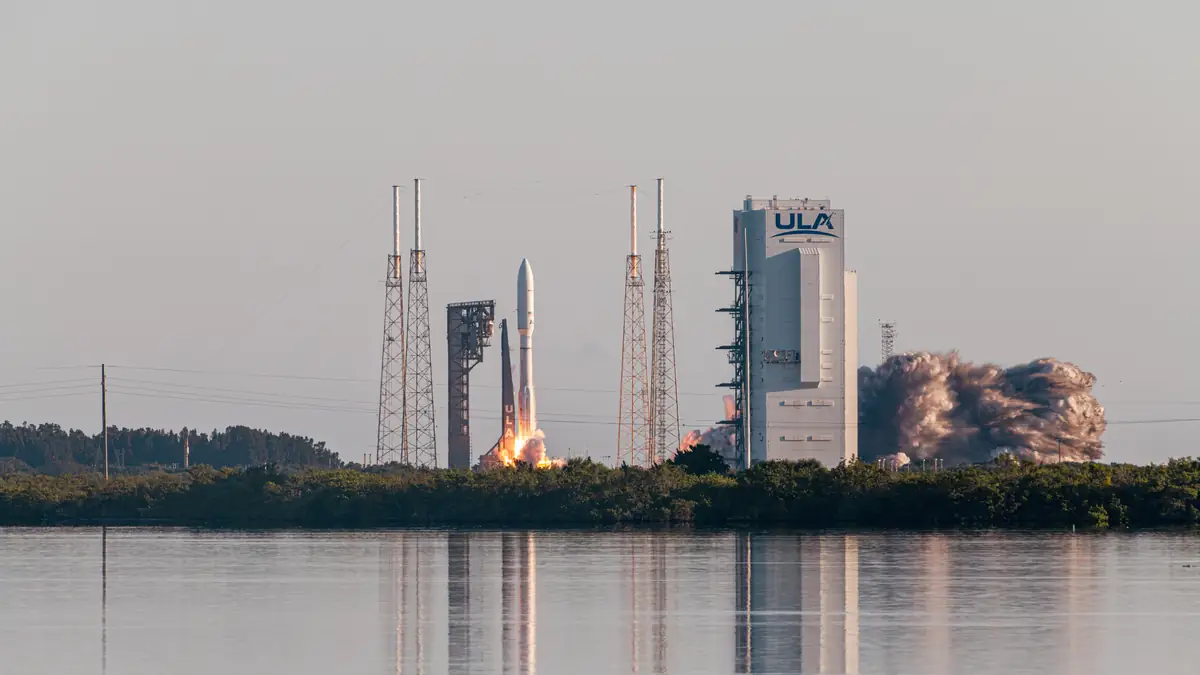
| First production launch | 2025 | On a ULA Atlas V |
| Rebrand to Amazon Leo | November 2025 | Plus enterprise preview and the Leo Ultra terminal |
| ~396 production satellites | By July 2026 | Per publicly tracked launch records |
Amazon has bought launches from United Launch Alliance (Atlas V and Vulcan), Arianespace (Ariane 6), Blue Origin (New Glenn) and a smaller number from SpaceX (Falcon 9). To date most missions have flown on Atlas V, with Falcon 9 and Ariane 64 flights as well. The heavier Vulcan and New Glenn rockets are expected to speed up deployment.
What about the FCC deadline?
Amazon's FCC licence originally required half of the constellation to be launched and operating by 30 July 2026 and the rest by 30 July 2029. Amazon was not on track to meet the 2026 milestone. According to reporting summarised on Wikipedia, the FCC waived the July 2026 deadline in early June 2026, but reduced the spectral priority of satellites launched after that milestone until Amazon speeds up deployment. We could not find the FCC order itself to confirm the exact terms, so treat this detail with caution.
Amazon has said service can begin in earnest once the first 578 satellites are in orbit, which gives continuous coverage across a band of latitudes.
What terminals and speeds will Amazon Leo offer?
Amazon has announced three customer terminals:
| Terminal | Size | Weight | Speed (Amazon's stated maximum) | Intended for |
|---|---|---|---|---|
| Leo Nano | About 7 in (18 cm) square | About 1 kg | Up to 100 Mbps | Homes, mobility |
| Leo Pro | About 11 in (28 cm) square | About 2.4 kg | Up to 400 Mbps | Homes, small business |
| Leo Ultra | 20 × 30 in (51 × 76 cm) | Not stated here | Up to 1 Gbps down, 400 Mbps up | Enterprise, government |
These are design targets. Real-world speeds will depend on how many satellites are overhead, local congestion and weather. Amazon has not published Indian prices for any terminal or plan.
Is Amazon Leo available yet?
Partly. In November 2025 Amazon began a private enterprise preview, with early customers including JetBlue, Hunt Energy, Vanu and Crane Worldwide Logistics, and began shipping Leo Pro units to selected preview customers. Amazon said it would expand to more customers, including residential users, as coverage and capacity increase during 2026. It has also signed distribution partners in other countries; for example, in July 2026 South African ISP Herotel announced plans to offer Amazon Leo-based service, with commercial availability expected in South Africa in 2027.
In April 2026, Amazon also agreed to acquire satellite operator Globalstar, with the deal expected to close in 2027.
What are Amazon Leo's plans for India?
India is a stated priority market. Amazon Leo representatives have publicly described India as a natural fit for expansion, and earlier reports said Amazon was targeting broadband speeds from 100 Mbps to 1 Gbps in India.
To offer satellite broadband in India, an operator typically needs:
- IN-SPACe authorisation (Indian National Space Promotion and Authorisation Centre) to provide services using its satellites over India.
- A GMPCS licence (Global Mobile Personal Communication by Satellite) from the Department of Telecommunications (DoT).
- Spectrum allocation, administratively assigned under India's Telecommunications Act, 2023, with pricing set after TRAI recommendations.
- Security compliance, including requirements on data handling, lawful interception and Indian gateways.
Where Amazon stands (as of October 2026)
- Amazon applied for IN-SPACe approval and for a GMPCS licence from the DoT.
- As of April 2026, MediaNama reported that Amazon Leo was still awaiting GMPCS and IN-SPACe clearances, and that the Globalstar acquisition adds Globalstar's own pending India process.
- We found no official DoT or IN-SPACe announcement of approval for Amazon Leo up to the date of writing.
By comparison, Starlink received its GMPCS licence in 2025, and Eutelsat OneWeb and Jio's satellite venture had already secured theirs.
Editor's tip: If you see a website or social media seller offering "Amazon Leo India connections" or terminal pre-bookings in India, be careful. Amazon has not announced Indian availability or pricing.
Amazon Leo vs Starlink: how do they compare?
| Amazon Leo | Starlink | |
|---|---|---|
| Operator | Amazon | SpaceX |
| Licensed constellation (first generation) | 3,236 satellites (FCC) | Many thousands, far larger fleet in orbit |
| Satellites in orbit (mid-2026) | ~400 production | Several thousand |
| Commercial service | Enterprise preview; wider rollout planned | Live in many countries |
| India status | Licences pending (as of our research) | GMPCS licence granted in 2025 |
| Cloud tie-in | Direct integration with AWS | No equivalent cloud parent |
Starlink's head start is large. Amazon's main advantages are its balance sheet, its launch contracts, AWS integration for enterprise and government customers, and its consumer retail reach.
For the technically curious: how the network works
- Orbits: Amazon's FCC filing places satellites in three orbital shells at roughly 590 km, 610 km and 630 km altitude, in multiple inclined planes. Low altitude cuts latency but means each satellite passes overhead in minutes, so terminals must hand off between satellites constantly.
- Phased-array antennas: Leo terminals use electronically steered antennas with no moving parts, allowing them to track fast-moving satellites.
- Optical inter-satellite links: laser links let satellites pass traffic between each other in space, reducing dependence on a ground gateway being within view of every satellite, which matters over oceans and remote areas.
- Spectrum: user and gateway links use Ka-band frequencies. Spectral priority with other LEO and geostationary operators is coordinated through the FCC and the ITU, which is why the FCC's waiver terms on priority matter.
- AWS integration: Amazon positions Leo as able to carry enterprise traffic directly into AWS, which is attractive for private networks, defence and remote industrial sites.
Why satellite internet matters for India
India has extensive mobile coverage in cities, but rural, hilly, island and border areas can still be hard to serve with fibre or towers. LEO satellite broadband is aimed at exactly those gaps: villages in the Himalayas, ships and offshore platforms, disaster relief, remote mines and railway or highway projects. It is also relevant for enterprise backup links, where a business wants a connection that does not share a failure point with its fibre provider.
At the same time, satellite broadband in India faces practical questions that apply to every operator, not just Amazon:
- Price: terminal costs and monthly fees have so far been well above typical Indian fibre and mobile data prices.
- Spectrum pricing: TRAI's recommendations and the government's final decision on administrative spectrum charges affect what operators can charge.
- Security rules: operators must meet Indian requirements on gateways, lawful interception and data localisation.
- Capacity: a single satellite beam covers a large area, so dense urban demand is better served by fibre and 5G.
That is why most analysts expect satellite broadband in India to start with enterprise, government and remote-area users rather than mass-market home connections.
What to watch next
- Whether Amazon's launch cadence increases as Vulcan and New Glenn fly more missions.
- Any FCC filings on the revised deployment milestones.
- An official DoT or IN-SPACe announcement on Amazon Leo's Indian authorisations.
- Consumer pricing and the date residential service opens in the first countries.
FAQ
Is Project Kuiper the same as Amazon Leo?
Yes. Amazon renamed Project Kuiper to Amazon Leo in November 2025.
Is Amazon Leo available in India?
Not as of October 2026. Amazon has applied for the required Indian approvals, but we found no public record of them being granted, and Amazon has not announced an Indian launch date or prices.
How fast is Amazon Leo internet?
Amazon's stated maximums are up to 100 Mbps for Leo Nano, up to 400 Mbps for Leo Pro, and up to 1 Gbps download for Leo Ultra. Actual speeds will vary.
How many satellites does Amazon Leo have?
About 400 production satellites had been launched by July 2026, out of 3,236 authorised by the FCC for the first-generation system.
Who launches Amazon's satellites?
United Launch Alliance, Arianespace, Blue Origin and SpaceX all have launch contracts with Amazon.
Will Amazon Leo be cheaper than Starlink?
Amazon has not published consumer pricing, so no reliable comparison is possible yet.
Sources
- https://en.wikipedia.org/wiki/Amazon_Leo
- https://www.fierce-network.com/broadband/amazon-leo-previews-its-satellite-broadband-enterprises
- https://www.benton.org/headlines/amazon-leo-debuts-new-gigabit-speed-ultra-antenna-begins-enterprise-preview
- https://www.medianama.com/2026/04/223-amazon-globalstar-deal-india-impact/
- https://businessworld.in/article/amazon%E2%80%99s-leo-satellite-play-project-kuiper-eyes-india-awaits-dot-approval-535579
- https://inc42.com/buzz/project-kuiper-seeks-quick-launch-in-indias-satellite-internet-market/
- https://www.mobileworldlive.com/big-tech/amazon-applies-for-satellite-comms-licence-in-india/
Featured image: Gwendolyn Kurz, U.S. Space Force, public domain, via Wikimedia Commons. Source
.jpg)